When planning the construction of a factory or industrial warehouse, selecting the right type of steel for the building design and intended use is one of the most crucial steps. This directly impacts the strength, safety, construction time, and overall project budget.
However, when discussing with engineers or contractors, many may be confused by the various names and types of steel. This article summarizes the types of steel commonly used in modern factory construction, along with their advantages and limitations, to help you choose the material that best suits your business needs.
Two popular types of steel used in factory structures.
In Thailand's construction industry, the steel used for main columns and beams at factories is broadly categorized into two types based on manufacturing processes and design, as follows
1. Hot-Rolled Structural Steel
This is traditional, familiar structural steel, manufactured by melting steel billets and rolling them into various shapes while the steel is still hot. Popular cross-sections used in factories include
- Wide Flange / H-Beam: Steel flanges of uniform thickness throughout, resulting in extremely high strength. Commonly used for main columns and beams that must support enormous loads
- I-Beam: Similar to an H-beam, but the steel flanges are thicker and tapered in the middle. Suitable for crane runway beams that need to withstand vertical impact forces.
Suitable for: Factories with large, high-vibration machinery, buildings with mezzanines for storing heavy goods, or factories requiring cranes to lift loads exceeding 5-10 tons.
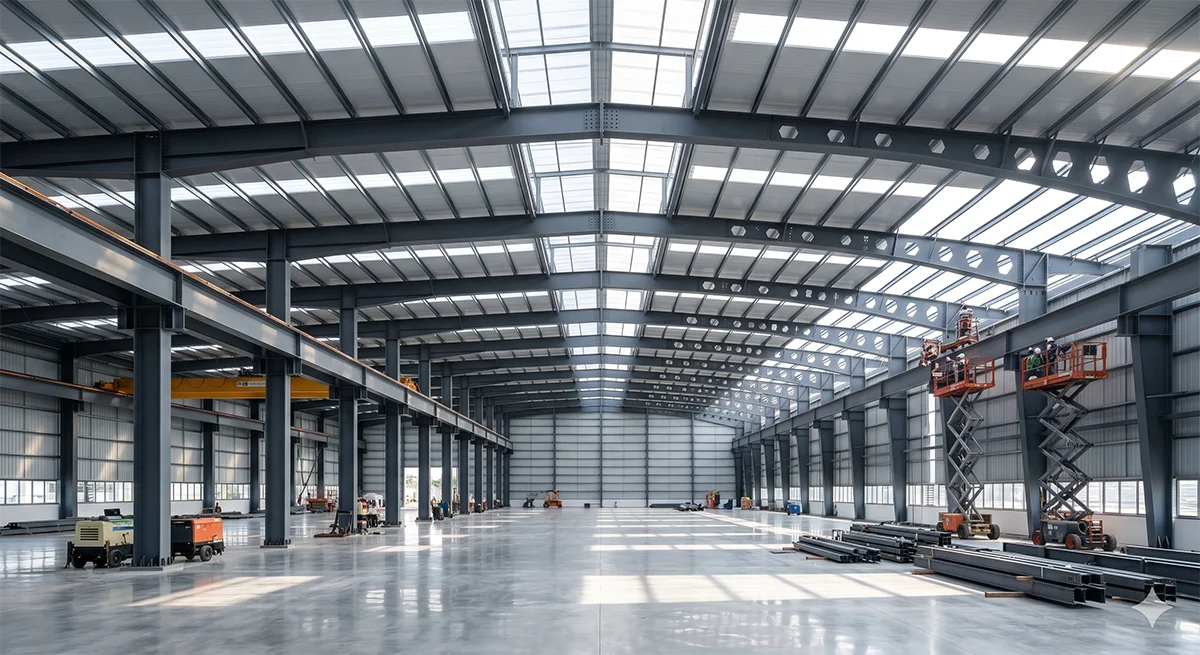
2. Variable cross-section steel for PEB (Built-up Tapered Section) systems.
This is an innovative steel product specifically manufactured for Pre-Engineered Building (PEB) systems. Thick steel plates are precisely cut and then welded together to form a "tapered member" shape. In areas subjected to high loads (such as at the base of columns or in the middle of the beam), the cross-sectional depth is greater than in areas subjected to less load.
- Highlights: This is the most efficient use of steel according to engineering principles, resulting in a lighter building while maintaining the same strength, leading to enormous savings on material and foundation costs.
Suitable for: Warehouses, general assembly plants, or showrooms requiring a spacious, pillar-free open area (clear span) of 20-60 meters for efficient product handling and arrangement.
Comparison Table: Which option is best for your factory?
| Factors for consideration | Hot-rolled steel sections (H-Beam / Wide Flange) | Variable profile steel (PEB system) |
| Structural characteristics | The cross-section is the same along the entire length of the beam. | The cross-section is tapered and curved to conform to the actual force applied. |
| Wide width without central pillars. | It's well-designed, but the beams will be very thick and heavy. | Excellent work! (Clear span of over 60 meters). |
| Cost savings | Medium (uses more steel weight). | Very high (saves 10-20% on steel and foundation costs). |
| Installation speed | Medium (depending on the skill of the on-site technician). | Very fast (pre-assembled parts, ready to install with just the screws). |
| Job suitability | High-altitude load bearing work, heavy crane installation. | Warehouses, production lines requiring large open spaces. |
Other components: Essential secondary structural steel.
In addition to the main columns and beams, the factory also needs other types of steel in secondary components, such as
- Roofing and wall purlins (Purlins & Girts): Currently, C-shaped or Z-shaped galvanized cold-formed steel is popular because it is lightweight, easy to install using a bolted system, and has a zinc coating that prevents rust without the need for painting, significantly reducing on-site work time.
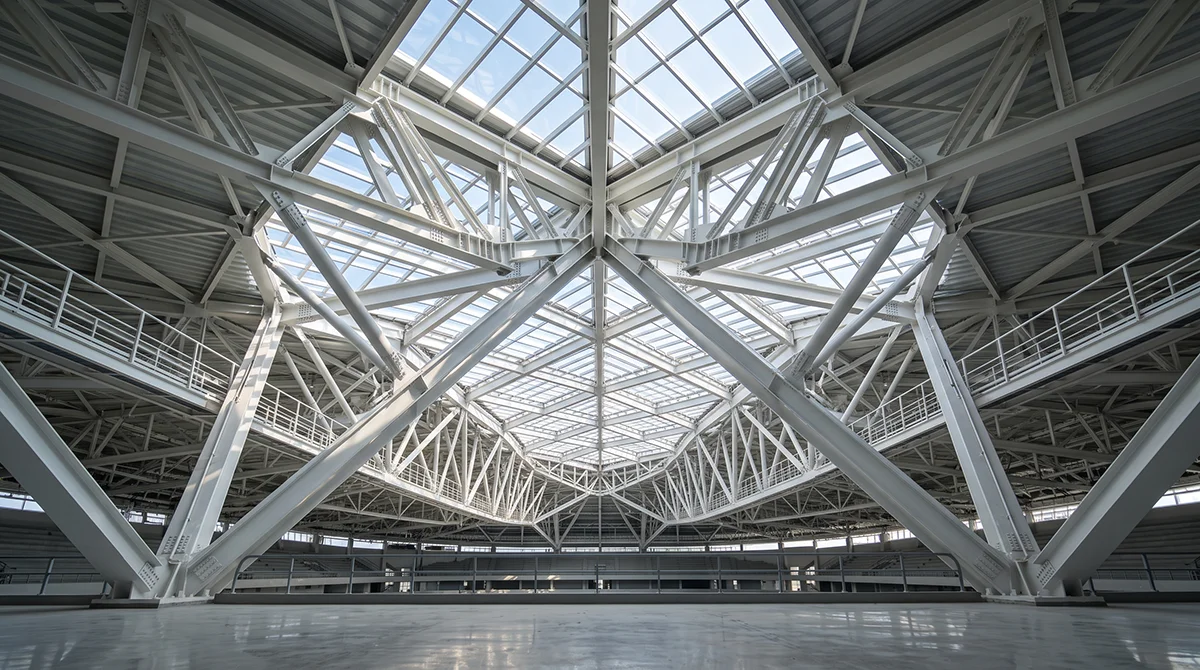
- Steel truss: Angle channels or square tubes are often welded together to form triangles. This is suitable for traditional factory roof structures where cost-effectiveness is desired, but may take longer to construct than PEB systems.
In summary: The best type of steel is the one that best suits your business function.
ไม่มีเหล็กชนิดไหนที่ดีที่สุดแบบครอบจักรวาล มีเพียงเหล็กที่ “คุ้มค่าและตรงกับโจทย์การใช้งาน” ของโรงงานคุณมากที่สุดเท่านั้นที่ Smart Building เราเข้าใจดีว่าโครงสร้างอาคารคือรากฐานของความสำเร็จในธุรกิจ ทีมวิศวกรของเราพร้อมให้คำปรึกษาและออกแบบระบบโครงสร้างเหล็กสำเร็จรูป (PEB) รวมถึงการผสมผสานเหล็กรูปพรรณอย่างเหมาะสม โดยดำเนินงานภายใต้มาตรฐานวิศวกรรมระดับสากล เพื่อให้โรงงานของคุณแข็งแรง ปลอดภัย จบงานได้ไวในงบประมาณที่สมเหตุสมผล
Start planning your factory construction professionally.
หากคุณกำลังมองหาพาร์ทเนอร์ที่ช่วยออกแบบ ผลิต และติดตั้งโครงสร้างเหล็กครบวงจร (One-Stop Service) ที่ได้มาตรฐานและช่วยคุณควบคุมต้นทุนได้อย่างแม่นยำติดต่อวิศวกรของ Smart Building เพื่อประเมินโครงการเบื้องต้นฟรี